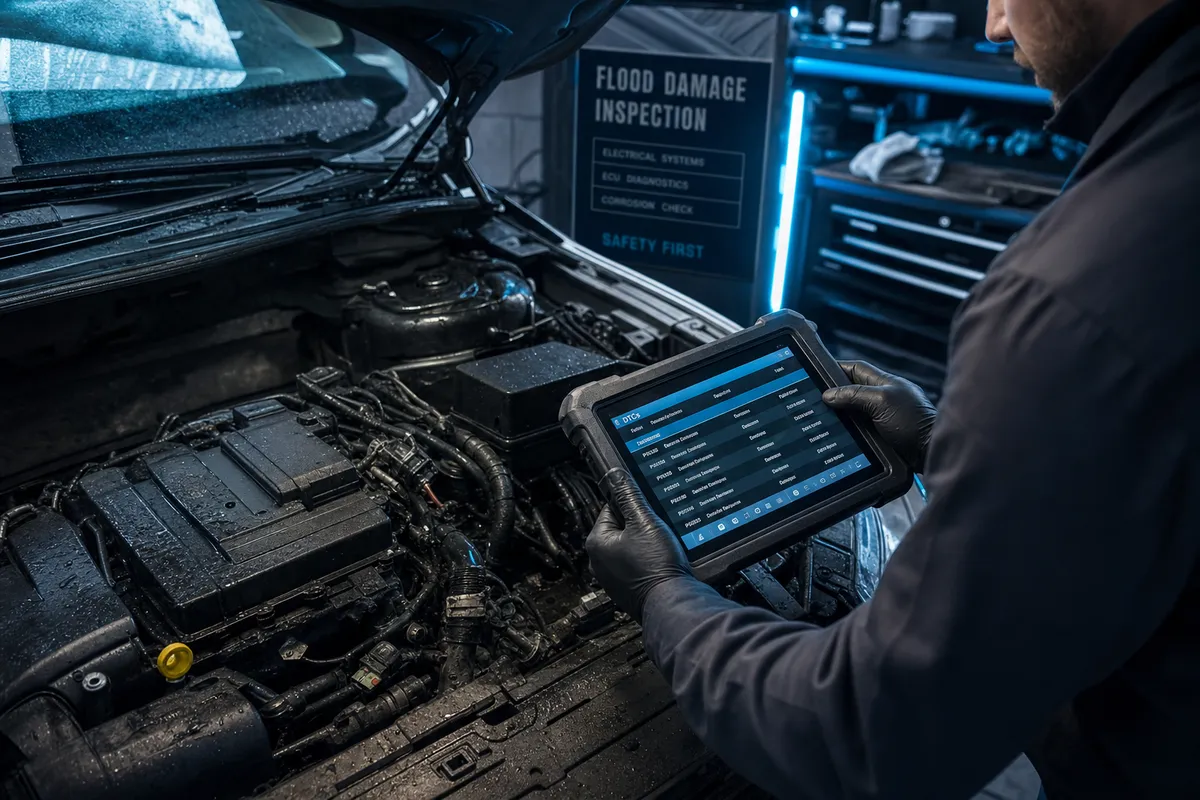
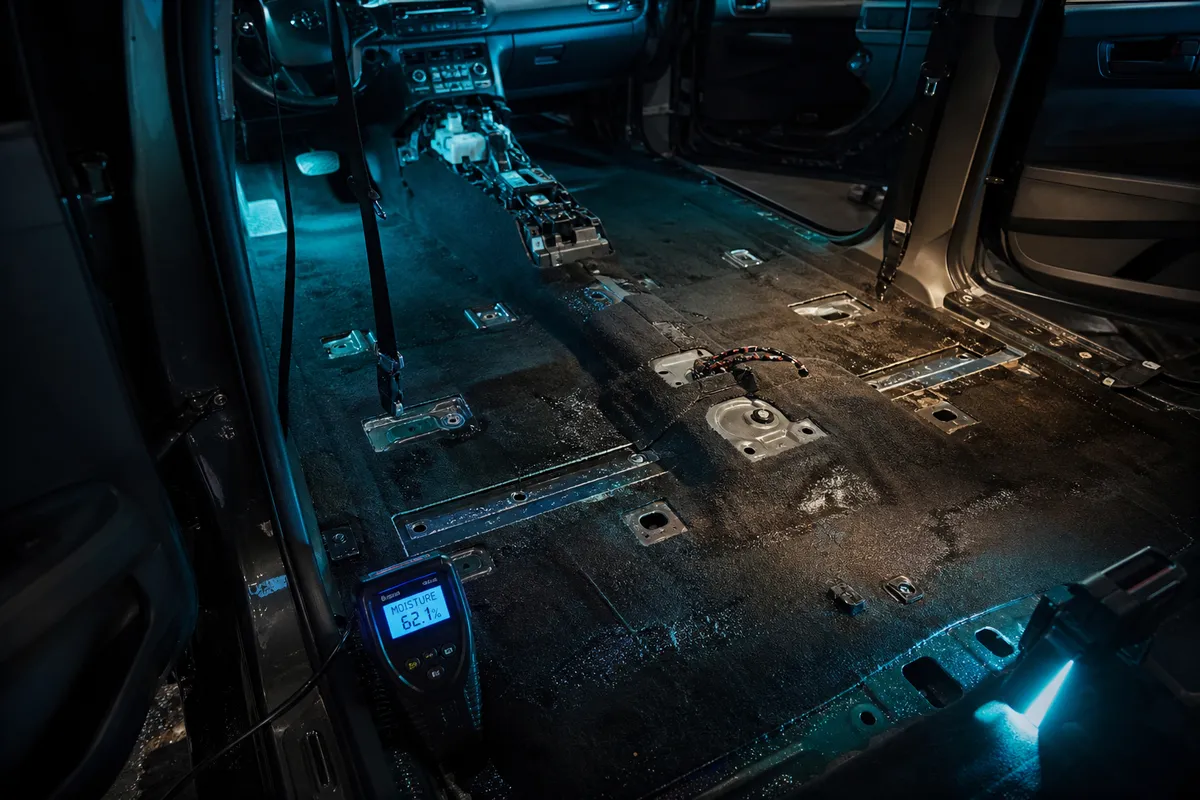
Reference article
Control Module Monitoring After Moisture Contact: ECU and Gateway Vocabulary Explained
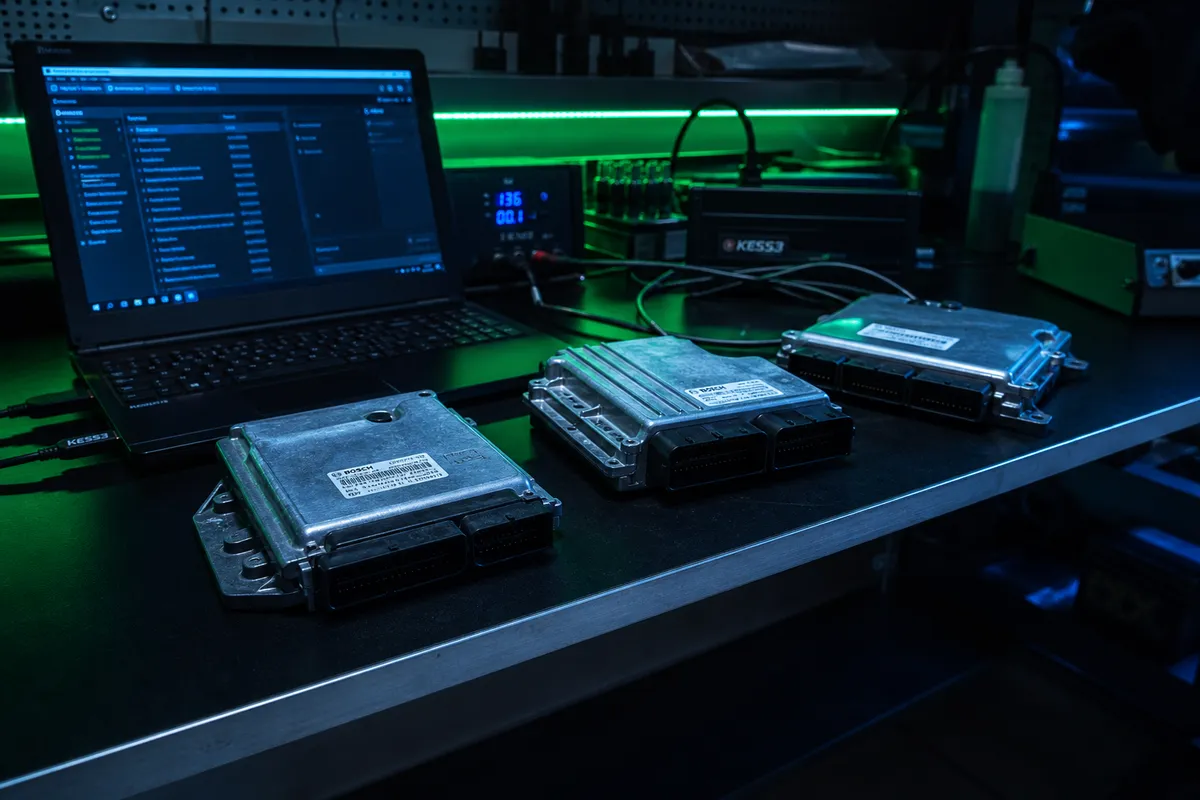
Educational reference for reading control module inspection notes, communication fault fields, and module replacement documentation after vehicle water exposure.
Why control modules require distinct documentation
Electronic control units — engine management, body control, transmission, and gateway modules — sit at different heights and orientations within a vehicle. Water exposure affects each module category differently depending on submersion depth, vehicle angle during flooding, and drain path effectiveness. Educational modules explain how inspection reports document module condition without prescribing universal replacement schedules.
Control module monitoring reports include communication test results, visual inspection notes, firmware version fields, and replacement part number references. The learning format on ferromagnet.info teaches readers to navigate these sections as document literacy exercises, not as remote technical verdicts.
Insurance liaisons and vehicle owners use module vocabulary to compare assessment reports from different sources — independent shops, manufacturer dealers, and catastrophe evaluation centers — recognizing that field names may differ while describing similar observation categories.
Module report fields and definitions
Assessment documents commonly include the following neutral field categories:
- Module identification block: Part number, software version, and physical location reference for each control unit reviewed.
- Communication bus status: Pass/fail or error count for CAN, LIN, or Ethernet networks connecting modules.
- Connector inspection note: Visual assessment of module harness plugs including pin condition and seal integrity.
- Corrosion indicator: Technician shorthand for oxidation or mineral deposit observations on module casing or pins.
- Functional test summary: Results of actuator commands, sensor feedback loops, and self-test routines initiated via scan tool.
Gateway and network architecture literacy
Modern vehicles route diagnostic communication through gateway modules that filter access between networks. Educational content explains gateway terminology — without claiming every water-exposed vehicle exhibits identical communication failures. Modules describe how shop reports document partial network access versus complete communication loss.
Readers learn to distinguish between a module that failed a communication test and a module physically damaged by moisture. The report may recommend further isolation testing — an informational next step, not an automatic replacement authorization.
Artificial intelligence tools may draft network architecture overviews for study purposes. Human editors verify module names against manufacturer documentation and remove phrasing that implies specific failure modes for unnamed vehicle models.
Programming and immobilizer documentation
Module replacement often involves programming, coding, or immobilizer synchronization steps documented separately from physical installation. Educational modules define terms like 'module initialization,' 'variant coding,' and 'security access session' as shop procedure vocabulary.
Financial planning documents may list programming labor as a distinct estimate line from hardware parts. Neutral definitions help readers understand estimate structure without interpreting line totals as outcome predictions.
Safety and authorization boundaries
Control modules linked to airbag, stability control, and braking functions carry heightened documentation requirements. Educational materials direct readers to licensed technicians for any module affecting safety systems — regardless of report language suggesting minor communication errors.
The portal describes information formats and learning sequences. Module monitoring literacy supports shop dialogue; repair authorization and programming execution remain with qualified facilities.
AI-assisted glossary organization
Editorial workflows may use artificial intelligence to organize dense module abbreviation lists into readable study sections. Each AI-assisted draft passes human verification against service information databases before publication.
Sections note where automation assisted drafting. Readers treat these as orientation aids alongside manufacturer module location diagrams and wiring schematics.
Summary
Control module monitoring education after moisture contact focuses on reading ECU, BCM, and gateway report fields with neutral vocabulary. Modules cover network architecture literacy, programming terminology, financial planning document fields, and AI-assisted editorial workflows — always within educational boundaries that defer hands-on decisions to licensed technicians.