Reference article
Cabin Moisture Mapping: Interior Inspection Vocabulary for Water-Damaged Vehicles
How to read interior inspection reports, odor documentation fields, and trim removal notes for vehicles affected by flooding, heavy rain intrusion, or standing water.
Interior inspection as structured documentation
Cabin moisture assessment produces detailed reports covering carpet padding condition, seat mounting points, dashboard vent paths, and trunk compartment drainage. Unlike exterior damage visible in photographs, interior water effects often appear in moisture meter readings, odor classification fields, and trim removal observations. Educational modules on ferromagnet.info explain how to read these documents systematically.
Interior inspection vocabulary helps vehicle owners, insurance adjusters, and shop liaisons align on what was observed versus what was recommended. The learning format treats each report section as a field definition exercise — describing how information is organized, not what a specific vehicle requires.
Heavy rain intrusion through sunroof drains, door seals, or windshield gaps may produce different documentation patterns than full submersion. Modules present both scenarios as distinct observation categories without ranking severity for individual cases.
Moisture measurement and odor field definitions
Interior assessment reports use standardized measurement and classification fields:
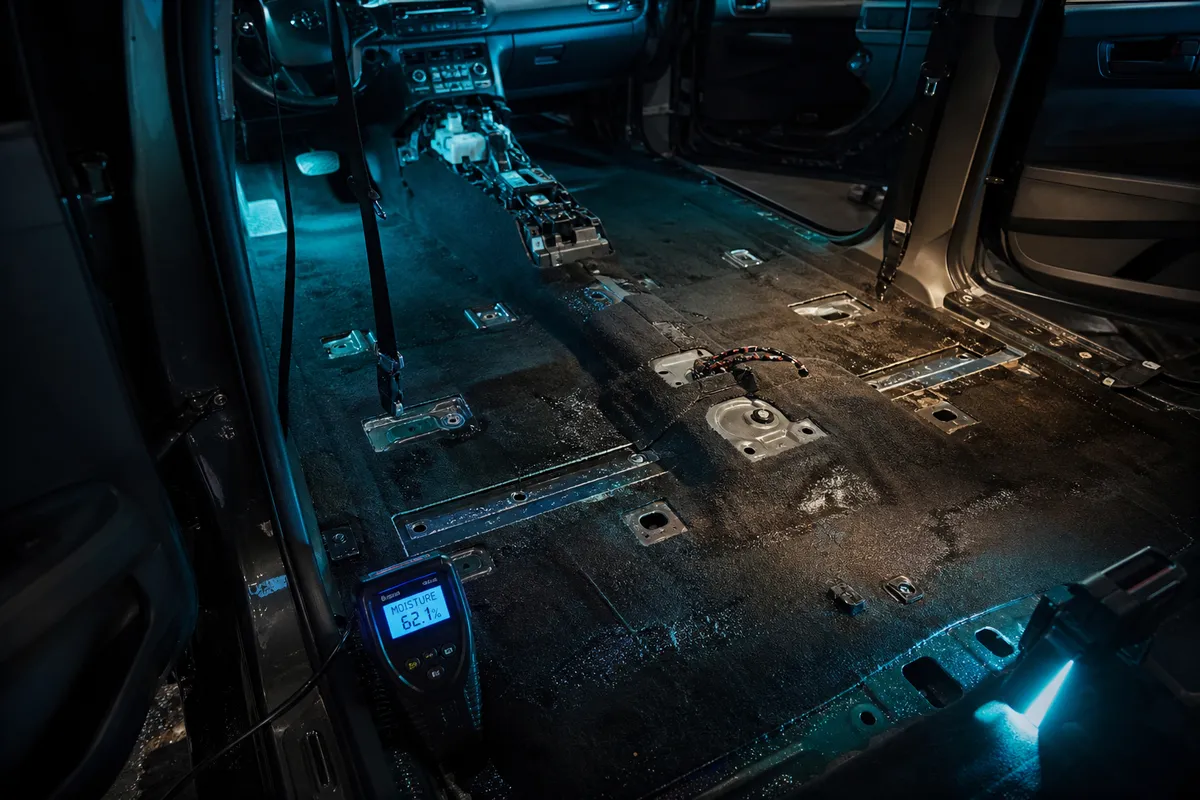
- Moisture meter reading: Numeric value from pin or pinless sensor at documented floor pan or seat rail locations.
- Water line indicator: Technician note marking highest observed moisture level on seat tracks, door panels, or wiring channels.
- Odor classification: Descriptive category — musty, sewage-contaminated, chemical — used for documentation and remediation planning.
- Padding condition note: Assessment of carpet underlay foam including saturation level and contamination type.
- Mold observation field: Visual documentation of fungal growth locations if present — subject to professional remediation protocols.
Trim removal and access documentation
Thorough interior inspection often requires removing seats, console assemblies, and door panels. Reports document which components were accessed, fastener condition, and clip replacement requirements. Educational content explains these as procedural documentation fields — describing shop workflow vocabulary.
Readers preparing for estimate review can ask: Which trim pieces were removed for inspection versus left in place? Were moisture readings taken at multiple floor pan locations? Does the report note contamination type affecting remediation approach selection?
Artificial intelligence may assist editors by drafting plain-language summaries of manufacturer interior removal sequences. Human reviewers verify torque specifications and airbag disable procedures remain referenced to primary service manuals, not summarized away.
Electrical components within the cabin
Interior inspection intersects with electrical documentation when reports cover seat wiring, airbag module locations, and infotainment unit mounting. Modules explain cross-reference fields linking cabin moisture notes to under-seat connector inspections and dashboard control unit assessments.
Safety system components — seatbelt pretensioners, side airbag modules, occupant sensors — receive dedicated report sections after water exposure. Educational materials consistently direct readers to licensed technicians for safety component evaluation.
Financial planning and estimate structure
Interior remediation estimates may include separate line categories: drying equipment hours, antimicrobial treatment, padding replacement, and reassembly labor. Financial thinking modules define these as document fields used in repair planning spreadsheets.
A 'cabin restoration allocation' describes a budget category label in assessment documents — not a prediction of final remediation scope or vehicle operability timeline.
Practical recommendation formats
Educational modules present practical recommendation outlines as checklists connecting observations to shop conversation points. Examples include documenting whether windows were left open during exposure, noting vehicle storage location after flooding, and recording initial drying attempts before professional assessment.
Recommendations describe information gathering steps and documentation practices. They do not authorize specific remediation products or promise particular cabin condition outcomes.
Summary
Cabin moisture mapping education focuses on interior inspection report vocabulary, moisture measurement fields, odor classification, and trim access documentation. The learning format covers cross-references to electrical and safety systems, financial planning terminology, AI-assisted editorial workflows, and practical recommendation outlines — all within neutral educational boundaries.